Blog
The Ultimate Guide to Sustainable Landscaping: Eco-Friendly Practices for a Greener Future
Sustainable landscaping focuses on designing and maintaining outdoor spaces that harmonize with the environment, reducing resource consumption, and enhancing biodiversity. The first step towards achieving this is by selecting native plants. Native species are well-adapted to local climates and soils, requiring less irrigation, fertilizers, and pesticides than non-native plants. This not only conserves water but also cuts down on chemical use, promoting a healthier ecosystem.
Another key practice is efficient water management. Implementing a smart irrigation system can significantly reduce water waste. These systems use weather data and soil sensors to provide your lawn with the precise amount of water it needs, minimizing runoff and saving on your water bill. Moreover, consider installing rain gardens and bioswales. These attractive features naturally collect and filter rainwater, reducing stormwater runoff and helping to recharge groundwater supplies.
Incorporating organic gardening techniques into your landscape is another sustainable practice to embrace. Organic mulches, such as wood chips or straw, improve soil quality by adding nutrients as they decompose. They also regulate soil temperature and moisture, which reduces the need for water and protects plant roots. Composting organic waste is equally beneficial, creating a natural fertilizer that enriches your soil and minimizes landfill contributions.
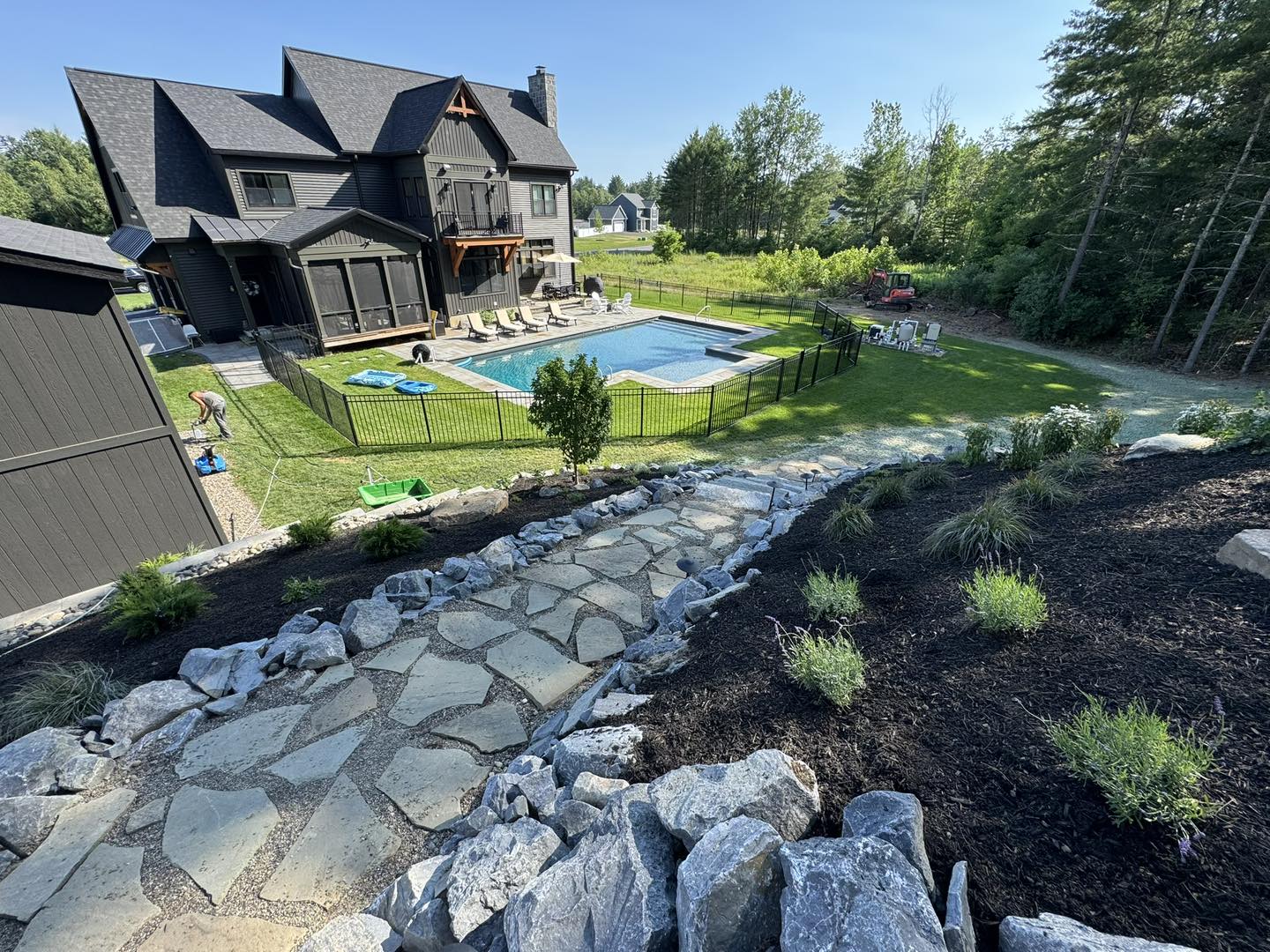
For those looking to integrate hardscape elements into their landscape, choosing eco-friendly materials is crucial. Permeable pavements, for instance, allow water to seep through them, reducing runoff and promoting natural water absorption. Moreover, recycled materials such as reclaimed wood and composite decking can be beautiful and durable alternatives for constructing garden paths, patios, or retaining walls.
Reducing lawn size is another effective way to enhance sustainability. While lawns can be beautiful, they often demand high water and chemical inputs. Instead, consider planting ground cover, wildflower meadows, or installing a vegetable garden. These options not only provide visual interest but also create habitats for local wildlife, contributing to biodiversity.
Finally, maintaining your landscape with eco-friendly practices is essential for long-term sustainability. Opt for electric or battery-powered tools over gas-powered ones to reduce carbon emissions. Regularly sharpening blades on mowers, pruners, and other cutting tools improves their efficiency, reducing energy use and prolonging the life of your equipment.
Incorporating these sustainable landscaping practices not only enhances the beauty and functionality of your outdoor areas but also creates a positive environmental impact. By prioritizing eco-friendly techniques, you are investing in a sustainable future, conserving natural resources, and showcasing your commitment to environmental stewardship.
At The Lawn Guy, we are here to assist you in your journey towards a more sustainable landscape. Our team of experts is dedicated to helping you implement these practices effectively, ensuring your property thrives in harmony with the environment. Together, we can cultivate a greener, more sustainable future for generations to come.